Fatigue Failure in Gate Valves: How Failure Analysis Prevents Recurring Leaks & Improves Reliability
Failure analysis is most valuable when it prevents the next failure.
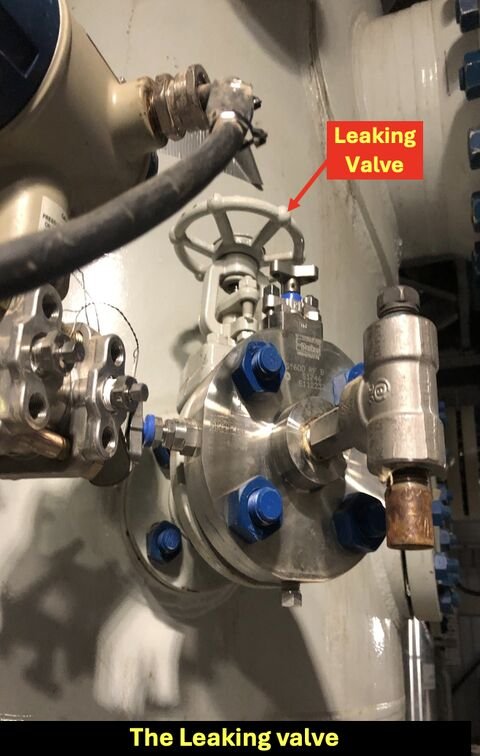
A client sent us a leaking gate valve with a through-wall crack that had developed after years in service.
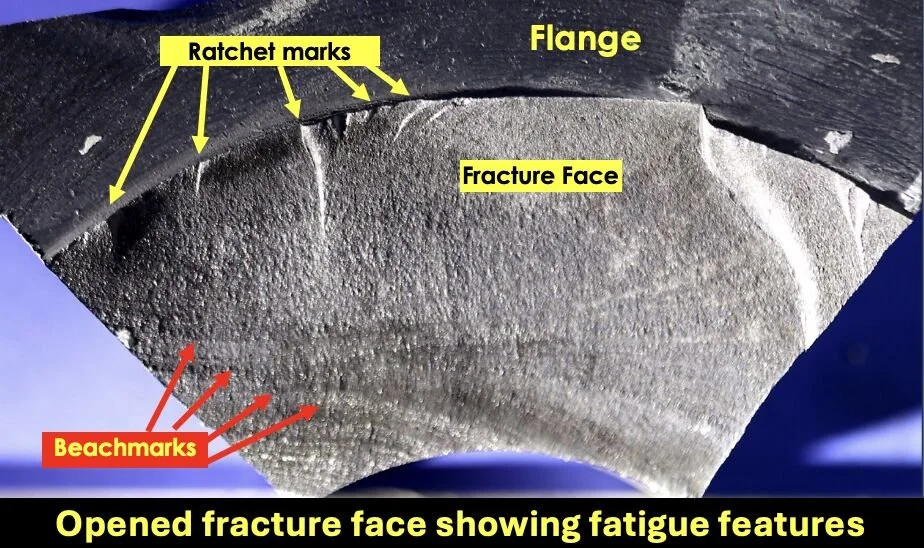
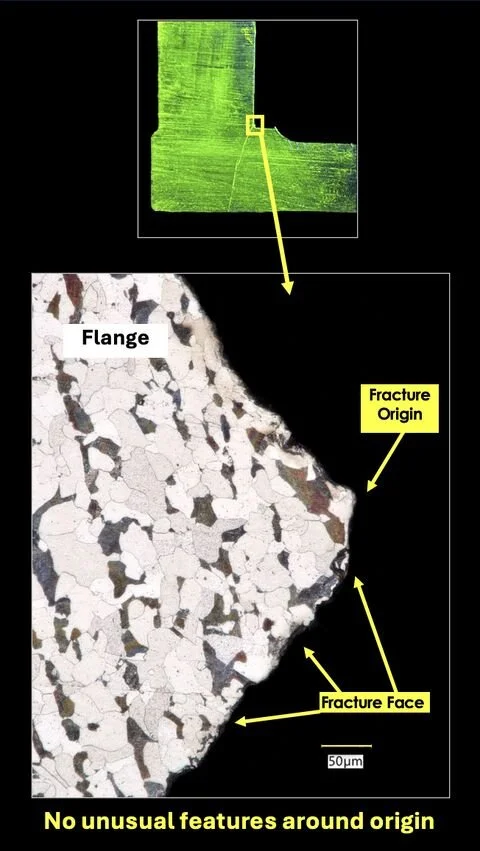
The investigation showed the valve had failed by fatigue. The crack had been growing for some time before finally penetrating through the valve wall and creating a leak.
But identifying the failure mechanism was only half the story.
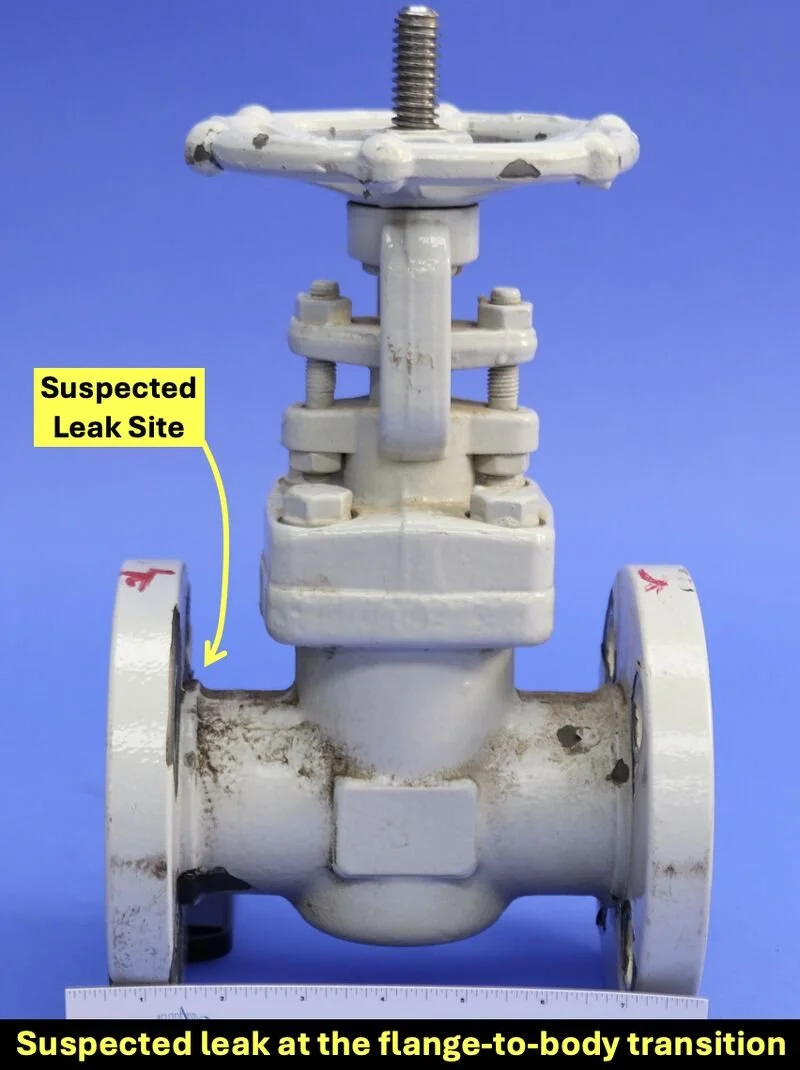
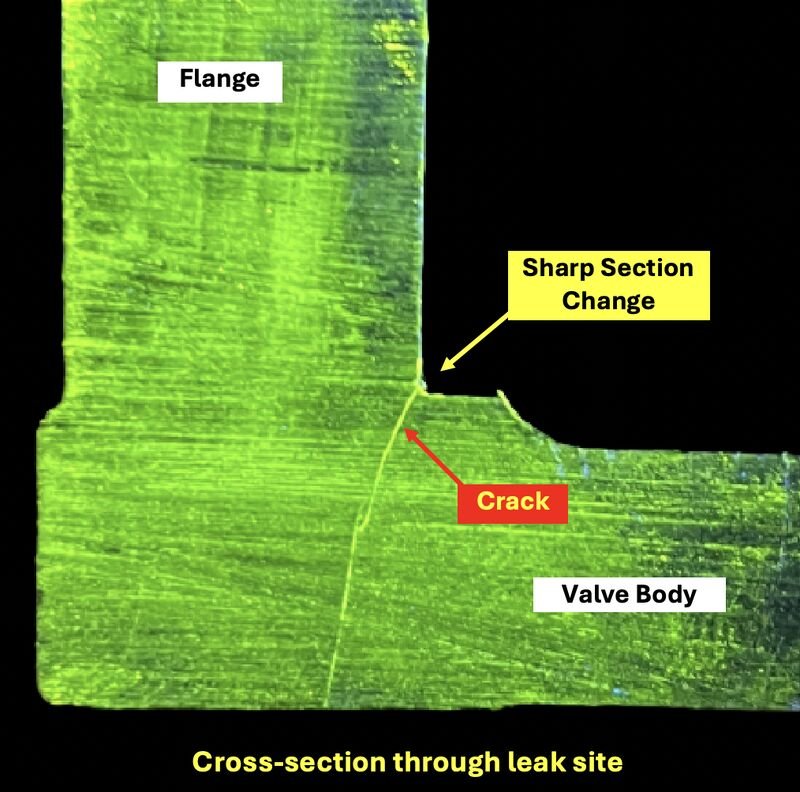
The crack had initiated at a sharp transition between the flange and valve body, where cyclic stresses were concentrated. Interestingly, the material wasn't the issue. The chemistry, hardness, and microstructure were all exactly what we'd expect, with no evidence of manufacturing or metallurgical defects.
The real value wasn't simply explaining why this valve failed. It was helping the client avoid the next one.
A few of the recommendations that came out of the investigation were:
Don't assume a replacement valve fixes the problem: The failed valve met the material specification. While the sharp section change acted as a stress concentrator, that's a common feature on many off-the-shelf valves. Simply replacing it with the same valve may not change the outcome if the service conditions remain unchanged.
Look for cyclic loading: Is the valve exposed to vibration? Even relatively small cyclic stresses can eventually produce fatigue cracking.
Take a look at what's being supported by the valve: Unsupported piping, instrumentation, or other equipment can increase bending stresses, particularly when vibration is present.
Inspect similar valves before they become leaks: Knowing exactly where this crack started meant the client could inspect similar valves at the same flange-to-body transition before another one leaked. Catching a fatigue crack during a planned inspection is far better than discovering it after it becomes a leak.
Failure analysis doesn't end when you identify the root cause. The best investigations leave the client with practical recommendations that improve reliability and help prevent the next failure.
Related Services