Dual Flowline Abandonment via CT Downline Pumping
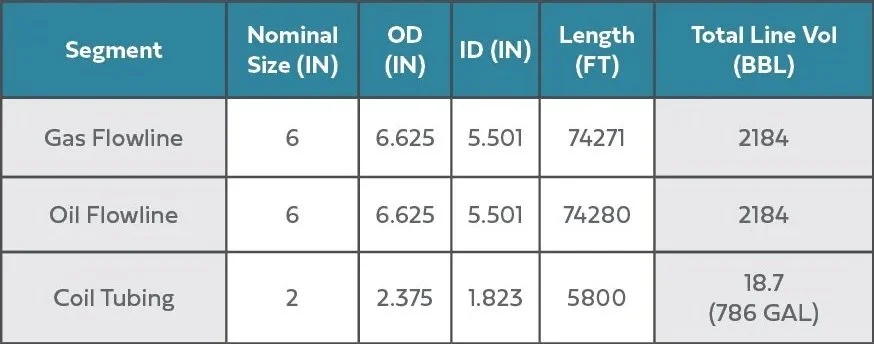
An offshore Gulf of America operator required abandonment services for an offshore asset that included both gas and oil flowlines that were nearing the end of their operational life. Each flowline was of comparable size, each approximately 6.6 inches in outer diameter (OD) and totaling about 74,000 feet in length.
Location
Offshore Gulf of America
Scope
The work involved cleaning subsea flowlines using a pigging and seawater displacement process from an offshore vessel, with fluids processed through temporary filtration to create clean water that could be discharged overboard.
Challenges
The primary challenges included the risk of hydrate formation restricting flow and limited flow rates that could reduce flushing efficiency and debris removal.
Solutions
A tailored gel system—AquaGel®, SafeGel®, DynoWash, MegGel and dyed MEG—was deployed to prevent hydrate formation, maintain hydraulic sealing, entrap debris, and effectively sweep residual contents from the flowlines.
Plan of Execution
Specialized equipment was mobilized across offshore vessels and platforms. The equipment included pumping, gel injection, and fluid handling systems.
The gas flowline was cleaned via coiled tubing and a gel pig train of dyed MEG, MegGel pig, SafeGel® pig, AquaGel® pig and DynoWash D‑Oil.
The flowline was then displaced with seawater to 1x line volume, with displaced fluids processed through filtration systems and transferred to offshore tankage for proper handling and storage after being received topsides.
The oil flowline was flushed using the same approach, with increased DynoWash D‑Oil to address fluid characteristics.
Technical Achievements & Benefits
Efficient Flushing: Gel pigs provided controlled displacement, effective debris removal, and continuous hydraulic sealing throughout operations.
Environmental Compliance: Displaced fluids were processed through staged separation and filtration systems, allowing compliant overboard discharge of treated water.
Reduced Operational Risk: Subsea pumping from a light intervention vessel and
temporary topside filtration minimized exposure and operational complexity.
Cost Efficiency: Optimized flushing and fluid management reduced overall project duration and abandonment costs.
Related Services