Failure Analysis & Failure Investigation
Failure analysis is a critical process in determining the physical root causes of problems. The process is complex, draws upon many different technical disciplines, and uses a variety of observation, inspection, and laboratory techniques.
Our Services
Failure Analysis
Failure Investigation
One of the key factors in properly performing a failure analysis is keeping an open mind while examining and analyzing the evidence to foster a clear, unbiased perspective of the failure.
Collaboration with experts in other disciplines (multi-discipline analysis) is required in certain circumstances to integrate the analysis of the evidence with a quantitative understanding of the state of stress, environment and background information on the design, manufacture, and service history of the failed component or system.
Viking Engineering has helped many operators solve some of the most complex failures in the industry. Our engineers have investigated a wide range of material failures from downhole tubular and bottom hole assemblies to surface wellhead and production equipment offshore and onshore. Viking Engineering can provide expertise from sample collection to the courtroom, if necessary. In addition, we can also help our clients avoid future problems by providing design modifications based on the failure causes.
Failure Analysis Services
Our services range from conducting analyses on failed downhole, subsea, and surface components and resolving complex failure issues of proprietary and API connections to investigating the causes of catastrophic failures due to corrosion and/or environmental assisted cracking (i.e. SSC, SCC, HSC, HIC etc..).
Our scientists and engineers can perform metallurgical evaluations, fracture surface evaluations and failure analysis of downhole tubular components using a multi-discipline approach based on materials & corrosion, tubular mechanics and chemistry.
Viking engineers are also capable of investigating downhole tubular component failures using commercial well design software packages (i.e. TDAS® , WELLCAT™ , and in-house developed models) to evaluate pipe body and connection stresses at failure locations.
Viking engineers and metallurgists are also knowledgeable in the areas of microstructural characterization, fracture surface evaluation (SEM/EDS fractography evaluations), mechanical testing (tensile, hardness, CVN), and fracture mechanics testing (KIC, JIC, J-R).
Failure Investigation Services
We can provide expertise from sample collection to the courtroom, if necessary. In addition, we can also help our clients avoid future problems by providing design modifications based on the failure causes.
Downhole Force Analysis
Assessment of Field Conditions Leading to Failure
Multi-Discipline Approach for Determining Failure Modes
Material & Stress Analysis
Metallurgical Analysis & Testing
Interface with Manufacturers
Wellsite Installation per Industry Best Practice
Recommendations for Future Practices
Consult Our Specialist
Operations Manager
Erika Alvarez is an operations, engineering, and project management professional with over 19 years of experience spanning engineering design, supply chain analysis, project delivery, production management, quality management, and organizational improvement.
Phone: 281.870.8455
Lab Metallurgical Specialist
Cesar has half a decade of experience working in RD and metallurgical labs across Houston. He is currently pursuing a degree in Engineering and Material Science.
Phone: 281.870.8455
Related Resources
We have many options for conducting root cause analyses (RCA) including TapRooT™ and CAST/STPA. The method described here is the method developed by GATE to simplify the analysis while maintaining adequate rigor.
This information provides insight to aid in preventing common failures and improving industry practices to reduce incident rates in addition to saving time and money.
The following material properties are important when understanding the limitations of API 5CT high strength steels: yield strength (YS), Charpy V-notch (CVN) impact energy, hardness and tempering.
Related Project Experience
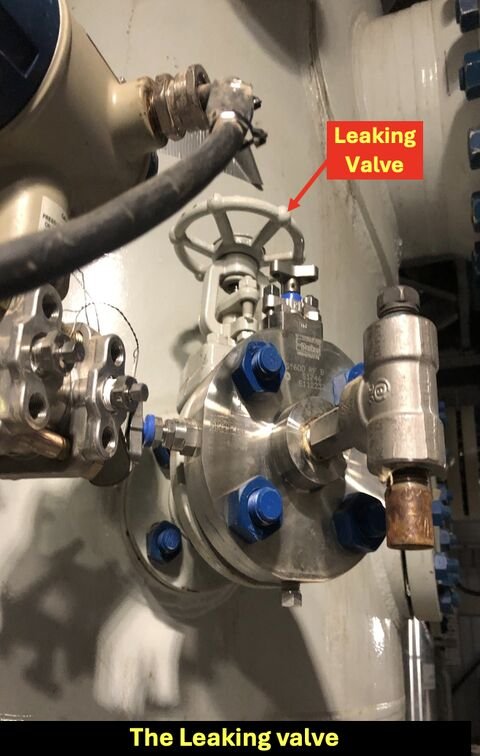
A client sent us a leaking gate valve with a through-wall crack that had developed after years in service.
The investigation showed the valve had failed by fatigue. The crack had been growing for some time before finally penetrating through the valve wall and creating a leak.
Complete Field Integrity Project including wells, gathering lines, and facilities. Corrosion and Chemical Optimization and Development of a Viking Proprietary Tool for integrity.
HPHT Well Design Support
Quality Assurance, Failure Analysis Work, Well Delivery Processes, Well Design
HPHT Well Design Support
Unconventional Plays, Horizontal Wells, Failure Analysis Work, Quality Assurance Work, Rig Operations
Unconventional Plays, Quality Assurance, Rig Operations, Mill Surveillance
Unconventional Plays, Horizontal Wells, Failure Analysis Work, Quality Assurance Work, Rig Operations
Well Engineering HPHT
Material Selection for acid gas injection wells in west Texas. Materials Selection included production tubing, production casing, packer, production liner, Xtree and wellhead equipment.
CRA materials selection for production Liner for packer-less well designs in West Texas CO2 floods
Materials Selection for new well completion to include casing, and tubing. Corrosion Models were developed for these type wells using state-of-art software and modeling techniques
An independent oil operator experienced four back-to-back casing failures in his Oklahoma shale program. These current failures and setbacks were eating into his budget and eroding stakeholder faith in the ability to complete wells.
His initial comment was, “I’m not getting any sleep – I need some help. You’ve got to help me stop the leaks!”
A winter-peaking natural gas storage plant undergoes a production expansion which includes infill well drilling and a gas compression system expansion.
Led study for independent oil and gas operator regarding the injection of flue gases from Gulf coast power plants to a Deepwater development for the purposes of enhanced oil recovery (EOR). This considered pretreatment and processing requirements for flue gases from natural gas-fired boiler plants, natural gas combined cycle plants, coal-fired boiler plants and integrated gasification combined cycle plants. Key issues considered were the ability of the pretreatment system to remove oxygen and water.
GATE was responsible for developing the overall Aseng Water Injection System Basis of Design.
GATE was requested to determine the potential risks involved in waterflood for the Neptune and Shenzi fields as a means to determine whether waterflood was a viable option for enhanced oil recovery. Based on this, GATE developed a waterflood philosophy document that details the problems and possible mitigation procedures for BHP’s use in determining whether or not to waterflood.
GATE provided in-house production chemistry support for the Horn Mountain, Atlantis and Thunder Horse assets.
GATE undertook a chemical vendor qualification process on behalf of Noble to procure the best suited chemical and chemical support for both the Aseng and Alen assets based on their fluids, and system along with their specific operational needs.
GATE leverages each chemical vendors based on performance of chemical, lab, ability to meet supply demands and upsets, price, experience and key criteria important to contractor and operator.
GATE undertook a rigorous qualification process on behalf of the client to BHP to procure the best suited chemicals and chemical support for both the Neptune and Shenzi assets based on their fluids, and system along with their specific operational needs.
BP Pipeline oversees the operation of 9 total oil and gas export systems from more than 20 different platforms in the GoM. The pipeline systems transport almost half-million barrels of oil and hundreds of MMSCF of gas daily from the producing platforms to onshore processing facilities.
The FAMP has been developed for BP Pipeline assets to ensure proper working of the high volume systems by organizing and delegating between operators, facilities, laboratories and onshore offices. By facilitating the review of system performance and operation, this information provides the basis of a continuous improvement approach.
As part of the scope of work, GATE was commissioned to develop two comprehensive, user-friendly screening tools to guide subsea flowline materials selection decisions for wet gas and waterflood during concept selection and design using field specific data.
GATE undertook an investigation into recovered, decommissioned equipment to determine both the cause of failure and investigate integrity of components that may not have failed. This information has proven invaluable to operators who can base the performance of other equipment of a similar type and construction in a similar environment. This was significant as the recovered materials ranged from the mud-line, to sea surface and topsides.
GATE provides Shell with cathodic protection design support for all their subsea projects. This includes coating selection (anti-corrosion and flow assurance) and qualification, which also involves interfacing with the coating yard. An important aspect of this operation is carrying out comprehensive quality audits of anode foundries and coating plants around the world.
GATE determined the risks and mitigation of risk associated with wet parking and flooding of a gas export pipeline with unfiltered seawater. The key concerns are corrosion due to microbes, oxygen corrosion, and drying to prevent hydrate formation when the pipe goes into service.
GATE undertook erosion and corrosion modeling in the flowline to develop sand production allowance and an erosion corrosion risk assessment. From this, a maximum rate of gas production that will allow the asset to maintain it design life was determined. This enabled the operator to safely increase production by 25% to without additional risk to the asset thereby increasing the Net Present Value of the asset.
GATE was responsible for formulating a detailed flow assurance strategy for the successful operation of Juniper production system. The project involved extensive cross-functional interaction, detailed study of the lessons learnt from similar fields in the region (offshore Trinidad), simulating a wide variety of what-if scenarios (both steady state and transient) to draft the flow assurance strategy and operability logic for optimized production.