Metering & Allocation Services
Metering using multiphase flowmeters and/or a virtual metering system not only offers the technology for real-time field monitoring and surveillance, but also provides a cost-efficient method for well testing and production allocation.
Our Services
Benefits of Using Viking Metering & Allocation Services
Benefits of ensuring robust metering & allocation of wells:
Meeting contractual production obligations and avoiding penalties.
Making sound and robust well and reservoir management plans.
Flow assurance issues prevention and mitigation.
Well/field abandonment.
Accurate flowrate assessment from each well is critical in making effective decisions to improve production optimization and reservoir management activities such as adoption of lifting techniques, changes to well routing, selection of wells for commingling, changes to the topsides operating conditions such as boarding pressure, choking, process flow routing, depletion planning, reserves booking, etc.
Poor quality of data results in the wastage of time, resources, and money. Hence routine validation and calibration of metering equipment is essential.
Also, production metering and allocation may have direct financial impact for applications that have different well ownerships, royalties, taxes and cost recovery system.
Read more about our Metering & Allocation Services below:
Benefits of Using Viking Metering & Allocation Services
GATE Energy believes in providing “fit-for-purpose” solutions to the customer that could be effectively implemented.
With vast experience and expertise in the provision of services to oil and gas operating companies in areas such as flow assurance, production chemistry, chemical injection, virtual metering, pipeline blockage remediation, systems engineering, GATE provides the following metering and allocation support:
Metering reviews and audits (both fiscal and production metering applications).
Measurement data validation and reconciliation.
Multiphase Flow Meters (MPFM) integration, evaluation, validation and upkeep.
Metering road maps and improvement plans.
Collection and analysis of fluid samples.
Evaluation of third-party vendors for MPFMs, and fluid sample testing.
Decision making on the frequency of sample collection and testing.
Decision making on the frequency for surveillance data evaluation.
Adopting suitable monitoring techniques (digitization, automated workflows, online vs. manual).
Our Process
Breakdown of the flow monitoring and allocation support services by GATE Energy for a typical project into several phases is shown below, though these services are scalable and tailored to meet specific project demands and client’s preferences.
Phase 1: Metering Audit
Phase 2: Improvement Plan for the M&A Process
Phase 3: Execution & Implementation
Virtual Metering Powered by GATE Prho™
Virtual metering system offers the option for an accurate, field-proven software-based tool substitute in the absence of metering devices, or a complement to existing metering devices. In the presence of physical meters, the virtual metering system offers improvement measurement and a reliable back-up complementing the flow meters in providing well production data continuously to the operator.
The GATE Prho™ Virtual metering system is a real-time, online, software-based, multiphase metering tool developed to provide accurate and continuous multiphase flowrates from wells.
The GATE Prho™ Virtual metering system has successfully been implemented in West African fields and is proven to be an accurate, reliable, cost-effective alternative, supplement and backup to physical multiphase meters installed in the field. The services provided by GATE Prho™ include well surveillance, production allocation and monitoring, production history matching, production optimization, gas-lift performance monitoring and optimization, monitoring of pressure buildup due to the deposition of solids such as wax over time, etc.
The functionalities and the GUI (Graphical User Interface) of GATE Prho™ can be tailored to meet field-specific and client-specific needs. Viking also provides continuous maintenance and support services for GATE Prho™ virtual metering system.
Consult Our Specialist

Engineering Manager | Production & Reservoir
Nelson is a Chemical and Petroleum Engineer with more than 20 years of experience. Nelson started his career as a Field Operations Engineer in Colombia and later moved to the USA working with ScandPower Petroleum Technology (now part of Schlumberger), GATE, and currently Viking Engineering. His experience includes onshore and offshore projects worldwide.
Phone: 281.870.8455
Related Resources
Through recognizing our clients’ needs, our engineering expertise, and our proprietary in-house GATE Prho™ software engine, we provide customizable, cost-effective, easy-to use software tools to deliver better client outcomes quicker.
This course will cover: Single-phase flow fundamentals, application examples in oil and gas industry, how to perform calculations, and modeling best practices.
This course contains application examples of single-phase fluid flow in oil and gas industry and step-by-step modeling.
This online course gives an overview of multiphase flow, how multiphase flow is different from two phase flow, the importance of understanding multiphase flow and the factors that influence multiphase flow.
This article will outline the challenges during integrity management, and the best practices that ultimately deliver a coordinated, effective, and cost-optimized IM plan.
This GATEKEEPER article focuses on the prediction, prevention and remediation of liquid loading, including discussion of liquid loading analysis.
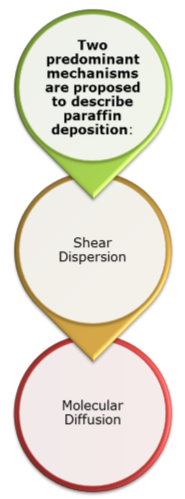
The objective of this GATEKEEPER is to provide a high-level overview of the model commonly used in the industry to estimate the wax deposition.
The design and development of a viable, robust wax management strategy relies upon the economical evaluation of available management techniques.
Wax management strategies developed during Front End Engineering Design (FEED) can mitigate or perhaps even prevent these costs. The goal of this GATEKEEPER series is to provide high-level insight into the planning, execution, and maintenance of wax management strategies.
One of the primary flow assurance challenges in the production of hydrocarbons is the prevention of pipeline blockages.
As new industry challenges arise, a new approach to multiphase analysis called Computational Multiphase Fluid Dynamics (CMFD) has appeared as a possible solution.
This GATEKEEPER will discuss the basic factors influencing corrosion modeling, while a later installment will elaborate on the different corrosion models available and their respective advantages and limitations.
Proper sizing of the flowlines and risers coupled with optimal choking and gas-lift will greatly reduce the risk of slugging and help in efficient management of slugs throughout the life of the field.
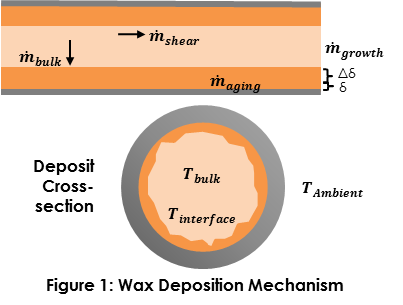
Paraffin precipitation and deposition in flowlines and pipelines is an issue impacting the development of deepwater subsea hydrocarbon reservoirs.
In this paper, the most commonly used In-Line Inspection (ILI) techniques, methodology and limitations applicable to detecting metal loss and wall thickness measurements are presented.
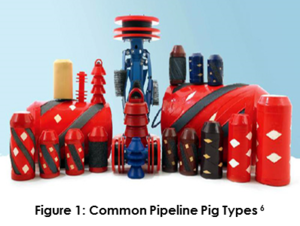
This paper is the first part of a two part series and presents an overview of pig selection criteria for cleaning and maintenance of the pipelines, and covers high level guidance on establishing a progressive pigging strategy.
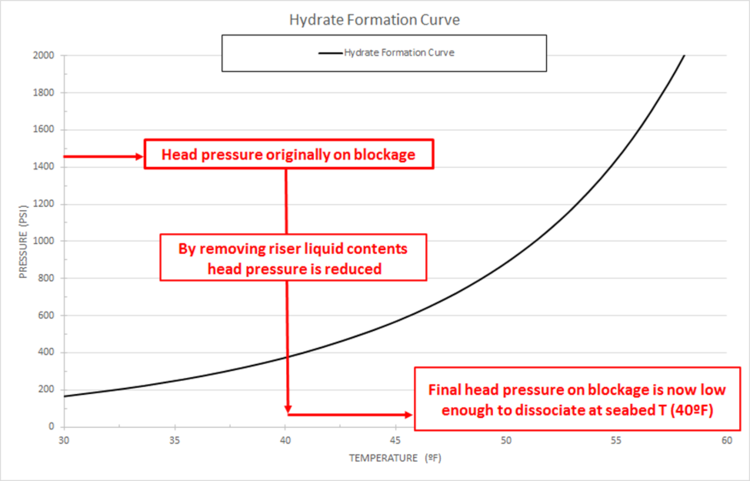
In subsea oil production systems, hydrate mitigation methods during steady state operation are almost always based around heat conservation.
CO2 corrosion modeling is a common practice to evaluate carbon steel flowlines and piping, both with and without inhibition, to ensure they achieve their intended design life. Modeling is also used to help determine if a corrosion resistant alloy should be used and can also be utilized to determine corrosion allowance and inhibition requirements.
Related Project Experience
Complete Field Integrity Project including wells, gathering lines, and facilities. Corrosion and Chemical Optimization and Development of a Viking Proprietary Tool for integrity.
GATE was requested to determine the potential risks involved in waterflood for the Neptune and Shenzi fields as a means to determine whether waterflood was a viable option for enhanced oil recovery. Based on this, GATE developed a waterflood philosophy document that details the problems and possible mitigation procedures for BHP’s use in determining whether or not to waterflood.
GATE provided in-house production chemistry support for the Horn Mountain, Atlantis and Thunder Horse assets.
GATE undertook a chemical vendor qualification process on behalf of Noble to procure the best suited chemical and chemical support for both the Aseng and Alen assets based on their fluids, and system along with their specific operational needs.
GATE leverages each chemical vendors based on performance of chemical, lab, ability to meet supply demands and upsets, price, experience and key criteria important to contractor and operator.
GATE undertook a rigorous qualification process on behalf of the client to BHP to procure the best suited chemicals and chemical support for both the Neptune and Shenzi assets based on their fluids, and system along with their specific operational needs.
BP Pipeline oversees the operation of 9 total oil and gas export systems from more than 20 different platforms in the GoM. The pipeline systems transport almost half-million barrels of oil and hundreds of MMSCF of gas daily from the producing platforms to onshore processing facilities.
The FAMP has been developed for BP Pipeline assets to ensure proper working of the high volume systems by organizing and delegating between operators, facilities, laboratories and onshore offices. By facilitating the review of system performance and operation, this information provides the basis of a continuous improvement approach.
GATE was responsible for formulating a detailed flow assurance strategy for the successful operation of Juniper production system. The project involved extensive cross-functional interaction, detailed study of the lessons learnt from similar fields in the region (offshore Trinidad), simulating a wide variety of what-if scenarios (both steady state and transient) to draft the flow assurance strategy and operability logic for optimized production.
GATE was involved in formulating the strategy for hot oil circulation and pigging operations for Chissonga. The hot oil circulation study involved optimization of the hot oil injection pressures and temperatures required to displace the cold dead leg in the pigging loop following an extended shutdown. The pigging study involved optimizing the pigging frequency, topsides injection pressures and pig velocities taking into account the production function for the entire life of the field.
The project involved detailed steady state and transient modeling and analysis of gas and oil production systems. Strategies were developed for pigging based on the liquid dropout pattern and fluid velocities.
Phase envelopes of the individual gas streams and gas-mixtures were studies in detail using the software PVTSIM and optimum operating pressures and temperatures were suggested to minimize the liquid drop out.
GATE was responsible for the flow assurance modeling to support Detailed Engineering, Final Commissioning and Startup and Operations Readiness for the Aseng Development. This included steady-state and transient modeling of the production, gas injection, and water injection systems.
GATE was approached by Tullow to provide a detailed view of the several options available in the industry for remediation of hydrate plugs in oil and gas lines, merits and demerits of each strategy and their applicability to the Jubilee field. The project also involves developing detailed procedures for hydrate remediation/removal for Jubilee considering the available topsides and subsea infrastructure.
GATE was involved in performing studies on the gas export line at different flowrates and platform pressures using the transient analysis software OLGA®. This includes calculation of the gas compressor requirements considering the characteristic curves and limitation on the compressor power) was calculated for a fixed export pipe ID.
After an in-line inspection of a pipeline in West Africa, a client discovered significant wall loss in the first three miles of the line. The tool also returned significant wax deposits, casting doubt on the current wax management efforts in place.
The wells producing to the pipeline historically produced H2S; however, the worst offenders were shut-in quickly after it was discovered that they were producing extremely high concentrations of the sour gas.
Developed standalone tool for operator to proactively monitor flow assurance risks based on the field specific reservoir fluids, subsea infrastructure and current operating conditions.
A client operating domestically and internationally needed expert technical support for materials and corrosion control. Their senior management came to Viking for a proposal to provide a variety of consultancy services to cover the following essential needs: materials selection, failure analysis, corrosion monitoring, technical assurance for procurement, and risk assessment.
A Gulf of Mexico (GoM) operator in the process of decommissioning one of its fields requested the engineering assessment of a blockage existing in their flowline-riser. The reservoir fluid characteristics and the field’s operational history were extensively reviewed. The review indicated hydrates to be the likely cause of the blockage.
A West Africa field operator witnessed an abnormal increase in pressure topsides when the flowline circulation pump was used to pump dead oil into the production line. No increase in subsea pressure was observed. Operational history prior to blockage hinted at the possibility of the presence of one or both wax and hydrate blockages in the production line. Depressurization options were limited by the blocked gas lift line.
This series of two articles discusses the diagnosis, detection and remediation of oil and gas production system blockages in detail. The current issue focuses on blockage characterization and detection.