Maintenance Management
Viking has the expertise to help operators develop maintenance philosophies, procedures, and a maintenance management system.
Our Services
Computerized Maintenance Management System (CMMS) Development
Spare Parts Development
Reliability Studies
The Viking Operations Readiness team takes a systems view.
At a minimum, successful operations readiness efforts involve operability reviews, development of the operations and maintenance philosophies and procedures, development of the maintenance management system and training of operators for initial startup and operations.
Yet, these efforts normally start too late and are frequently inadequately resourced. Operations readiness efforts started late in a project can’t reach their potential. While the design may be executed in silos, the operations readiness planning cannot.
The Viking Operations Readiness team takes a systems view. Taking a systems view enables us to develop solutions that cross many different disciplines and boundaries allowing the operations team to be efficient and effective.
Read more about our Maintenance Planning & Spare Parts Services below:
Computerized Maintenance Management System (CMMS) Development
Asset Hierarchy &
Equipment Attribute Development
Preventive Maintenance Development
Bill of Material Development
Spare Parts Development
Recommended Spares List Development (SPIR, SPIL)
Spare Parts Vendor Interfacing
Spare Parts Analysis
Bill of Material Development
Reliability Studies
Reliability Centered Maintenance (RCM)
Failure Modes & Effects Analysis (FMEA)
Computerized Maintenance Management System (CMMS) Development
Consult Our Specialist
Topsides Operations Senior Advisor
Howard has 38 years of work experience, with 15 years in Petrochemical Industry in process and project design roles. For the last 23 years, he has been in Oil and Gas consulting roles with the 12 years being involved specifically in Systems Engineering.
Phone: 281.870.8455
Related Resources
So your pipe burst, your pump shaft snapped, or your welded joint split, and you need to figure out why and how to fix it. The next steps you take can make the difference between finding answers and leaving the mystery unsolved until the next failure.
We have many options for conducting root cause analyses (RCA) including TapRooT™ and CAST/STPA. The method described here is the method developed by GATE to simplify the analysis while maintaining adequate rigor.
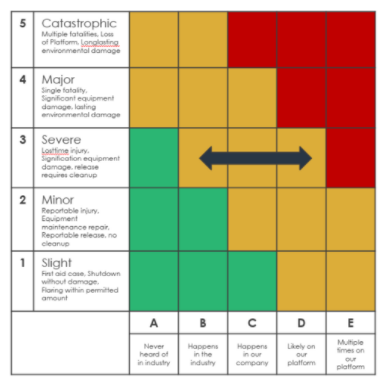
The GATE approach to risk ranking makes risk assessment easier, more accurate and more repeatable by incorporating LOPA insights into the risk matrix approach.
HAZOP is the most commonly applied process hazard analysis (PHA) methodology in the processing industries. It is also the most flawed!
Making Risk Assessment Better, Less Ambiguous and Repeatable - And more Actionable
This online course teaches the Stream-Based HAZOP method. The method is more effective, requires much less session time (though significantly more prework) and is much less repetitive and hence, is far less tedious for the participants.
The GATE Stream-based HAZOP process avoids these pitfalls via some novel modifications to the process. You can obtain a copy of the book here.
In Part 1 of this GATEKEEPER series on complexity, we identified 8 key sources of project and project team complexity. In Part 2, we discuss what can be done about them.
A project consists of two interacting networks; one CPS (the kit) and one CAS (the human organization). We should expect some surprises (emergence) from the interaction of these two complex systems.
SOPs are important for the safe and effective operation of industrial plants, including oil and gas facilities. But SOPs are frequently developed late in the project, after the design is completed and construction is well underway. And they may be used for little other than operator training. Following startup, they often end up on a shelf collecting dust. Used this way, SOPs have little influence on either the design or the operation of the facility. SOPs can be so much more. They can be both an integral part of the design process and a catalyst for culture change in the industry.
When properly developed, a CMMS tool can ensure that detailed equipment information is readily available, improve reliability, reduce equipment and facility downtime and more.
A HAZOP is a team-based process hazard analysis (PHA) method. Its purpose is to identify hazards and operability issues in a process design.
An effective risk assessment method allows the HAZOP participants and the project team to focus their time and energy on the more significant hazards.
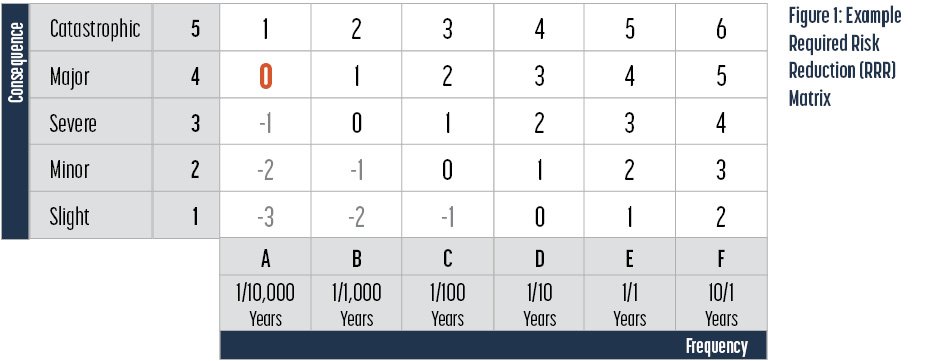
LOPA provides a consistent basis for judging whether there are sufficient independent protection layers against hazardous events to achieve the risk reduction required to achieve such an explicit target.
Control Systems Part 3: Rules for Tuning Loops Prior to Startup
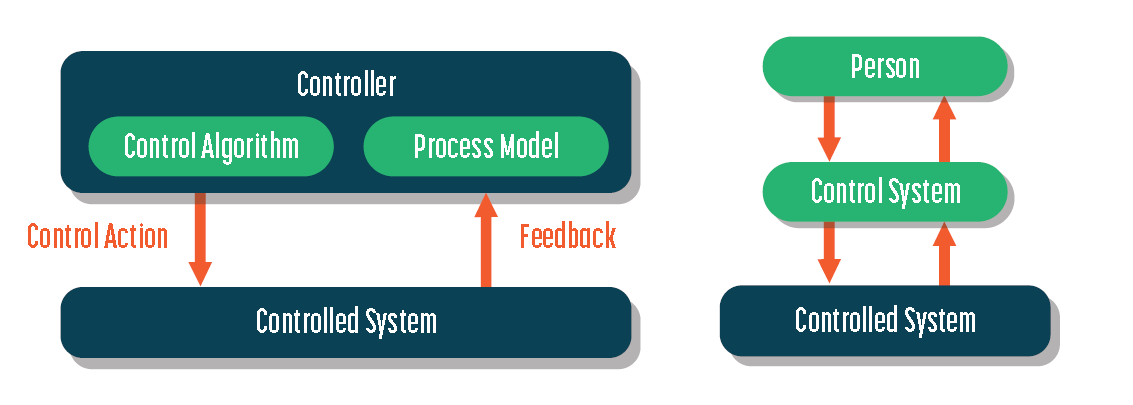
This is part two of the GATEKEEPER series on control systems tuning. To effectively tune a control loop, there needs to be an understanding about the dynamics of the system.
This series of GATEKEEPERS will provide methods for using readily available process design data for determining effective tuning parameters before startup.
Studies suggest that humans conducting simple, mundane tasks make an error roughly 1% of the time. Error rates for complex tasks are much higher. Some procedures are more error-prone than others. It is incumbent upon us to write procedures that are not only accurate, but that are likely to be implemented without error.
Chokes and control valves are often oversized even for normal operation, and are sometimes far too large to provide adequate control of low flow rates at initial startup.
HAZOPs are not as effective as they should be. Duhon and Sutton (2010, SPE 120735) identified many reasons why we don’t learn as much as we should from HAZOPs.
Related Project Experience
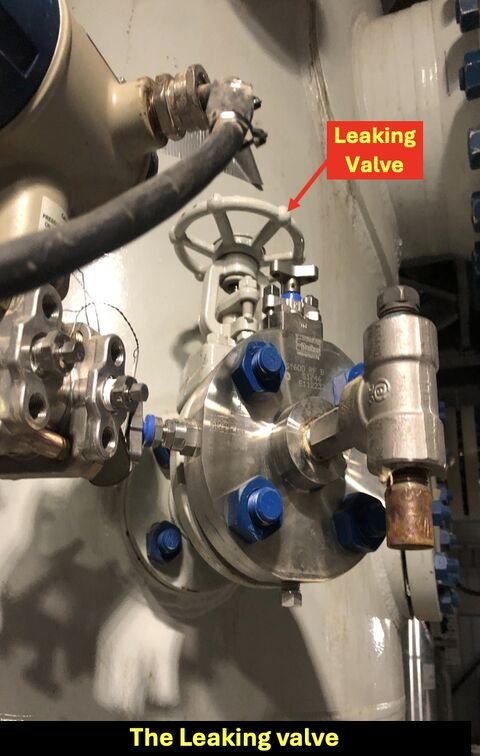
A client sent us a leaking gate valve with a through-wall crack that had developed after years in service.
The investigation showed the valve had failed by fatigue. The crack had been growing for some time before finally penetrating through the valve wall and creating a leak.
Complete Field Integrity Project including wells, gathering lines, and facilities. Corrosion and Chemical Optimization and Development of a Viking Proprietary Tool for integrity.
HPHT Well Design Support
Quality Assurance, Failure Analysis Work, Well Delivery Processes, Well Design
HPHT Well Design Support
Unconventional Plays, Horizontal Wells, Failure Analysis Work, Quality Assurance Work, Rig Operations
Unconventional Plays, Quality Assurance, Rig Operations, Mill Surveillance
Unconventional Plays, Horizontal Wells, Failure Analysis Work, Quality Assurance Work, Rig Operations
Well Engineering HPHT
Material Selection for acid gas injection wells in west Texas. Materials Selection included production tubing, production casing, packer, production liner, Xtree and wellhead equipment.
CRA materials selection for production Liner for packer-less well designs in West Texas CO2 floods
Materials Selection for new well completion to include casing, and tubing. Corrosion Models were developed for these type wells using state-of-art software and modeling techniques
An independent oil operator experienced four back-to-back casing failures in his Oklahoma shale program. These current failures and setbacks were eating into his budget and eroding stakeholder faith in the ability to complete wells.
His initial comment was, “I’m not getting any sleep – I need some help. You’ve got to help me stop the leaks!”
A winter-peaking natural gas storage plant undergoes a production expansion which includes infill well drilling and a gas compression system expansion.
Led study for independent oil and gas operator regarding the injection of flue gases from Gulf coast power plants to a Deepwater development for the purposes of enhanced oil recovery (EOR). This considered pretreatment and processing requirements for flue gases from natural gas-fired boiler plants, natural gas combined cycle plants, coal-fired boiler plants and integrated gasification combined cycle plants. Key issues considered were the ability of the pretreatment system to remove oxygen and water.
GATE was responsible for developing the overall Aseng Water Injection System Basis of Design.
GATE was requested to determine the potential risks involved in waterflood for the Neptune and Shenzi fields as a means to determine whether waterflood was a viable option for enhanced oil recovery. Based on this, GATE developed a waterflood philosophy document that details the problems and possible mitigation procedures for BHP’s use in determining whether or not to waterflood.
GATE provided in-house production chemistry support for the Horn Mountain, Atlantis and Thunder Horse assets.
GATE undertook a chemical vendor qualification process on behalf of Noble to procure the best suited chemical and chemical support for both the Aseng and Alen assets based on their fluids, and system along with their specific operational needs.
GATE leverages each chemical vendors based on performance of chemical, lab, ability to meet supply demands and upsets, price, experience and key criteria important to contractor and operator.
GATE undertook a rigorous qualification process on behalf of the client to BHP to procure the best suited chemicals and chemical support for both the Neptune and Shenzi assets based on their fluids, and system along with their specific operational needs.
BP Pipeline oversees the operation of 9 total oil and gas export systems from more than 20 different platforms in the GoM. The pipeline systems transport almost half-million barrels of oil and hundreds of MMSCF of gas daily from the producing platforms to onshore processing facilities.
The FAMP has been developed for BP Pipeline assets to ensure proper working of the high volume systems by organizing and delegating between operators, facilities, laboratories and onshore offices. By facilitating the review of system performance and operation, this information provides the basis of a continuous improvement approach.
As part of the scope of work, GATE was commissioned to develop two comprehensive, user-friendly screening tools to guide subsea flowline materials selection decisions for wet gas and waterflood during concept selection and design using field specific data.
GATE undertook an investigation into recovered, decommissioned equipment to determine both the cause of failure and investigate integrity of components that may not have failed. This information has proven invaluable to operators who can base the performance of other equipment of a similar type and construction in a similar environment. This was significant as the recovered materials ranged from the mud-line, to sea surface and topsides.
GATE provides Shell with cathodic protection design support for all their subsea projects. This includes coating selection (anti-corrosion and flow assurance) and qualification, which also involves interfacing with the coating yard. An important aspect of this operation is carrying out comprehensive quality audits of anode foundries and coating plants around the world.
GATE determined the risks and mitigation of risk associated with wet parking and flooding of a gas export pipeline with unfiltered seawater. The key concerns are corrosion due to microbes, oxygen corrosion, and drying to prevent hydrate formation when the pipe goes into service.
GATE undertook erosion and corrosion modeling in the flowline to develop sand production allowance and an erosion corrosion risk assessment. From this, a maximum rate of gas production that will allow the asset to maintain it design life was determined. This enabled the operator to safely increase production by 25% to without additional risk to the asset thereby increasing the Net Present Value of the asset.
GATE was responsible for formulating a detailed flow assurance strategy for the successful operation of Juniper production system. The project involved extensive cross-functional interaction, detailed study of the lessons learnt from similar fields in the region (offshore Trinidad), simulating a wide variety of what-if scenarios (both steady state and transient) to draft the flow assurance strategy and operability logic for optimized production.