Geothermal Energy Services
Surface operational temperatures >149°C (300°F) makes well design, materials and equipment selection critical for Geothermal projects.
Geothermal Services
Provides fit-for-service evaluations, testing and analysis for evaluating complex downhole failures, pipeline failure investigations and forensic services for midstream and downstream clients and also provides services to the renewable energy sector.
Technical Articles, Courses & Calculators
This course offers a look into a world of interactive stresses from multiple fracturing events using case histories, plus more.
This training session covers topics specific to deepwater production, completion, and tubing design, and the development of “A” Annulus Operating Envelope (AOE)™ characterization. Material selection aspects, performance properties, production load cases, packer performance, MAWOP calculations, and AOE™ construction are covered in detail.
This training course covers the fundamentals of casing and tubing design and advanced topics affecting the CCS well design.
This training course covers the fundamental principles in casing and tubing design and advanced topics affecting high temperature steam & geothermal well design and the impact to the overall well design.
This 3-day course covers the relevant subjects required to understand the structural mechanics of downhole tubular design. A special emphasis on horizontal aspects will be included.
This 2-day session covers introductory topics in casing and tubing design.
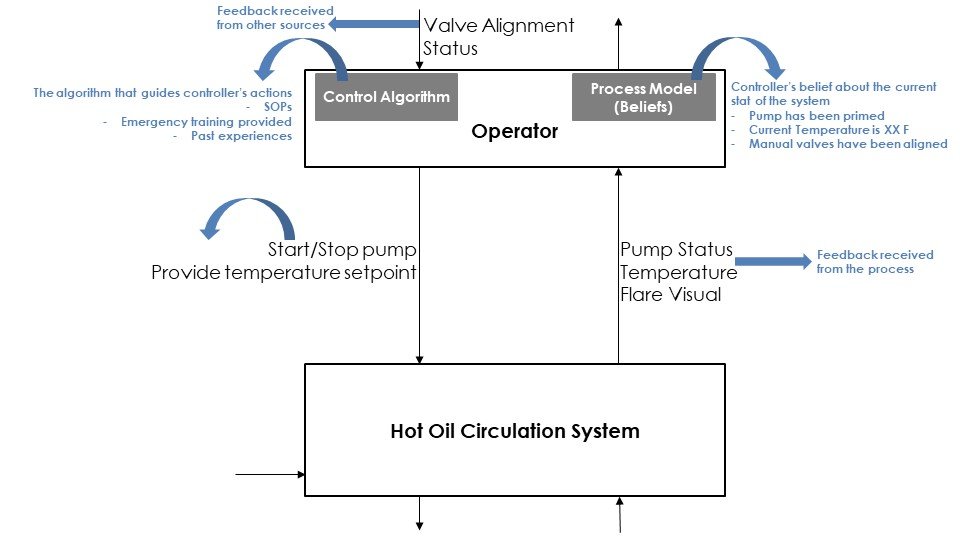
Systems Theoretic Process Analysis (STPA) is a systems approach to hazard analysis. It is based on the premise that accidents happen when we lose control. They are a control problem, not a failure problem.
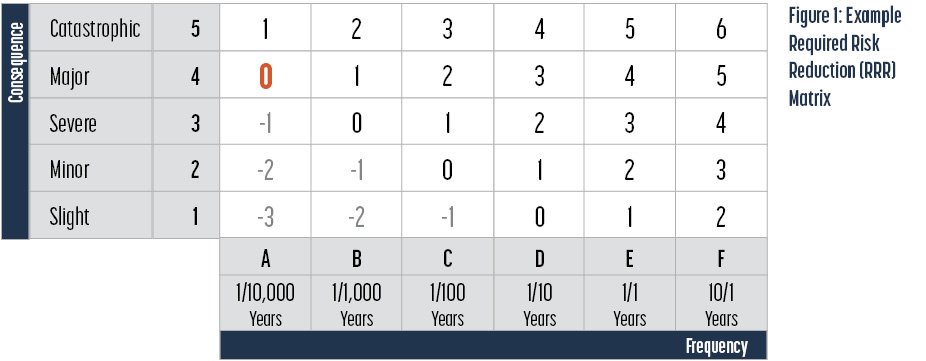
The GATE approach to risk ranking makes risk assessment easier, more accurate and more repeatable by incorporating LOPA insights into the risk matrix approach.
HAZOP is the most commonly applied process hazard analysis (PHA) methodology in the processing industries. It is also the most flawed!
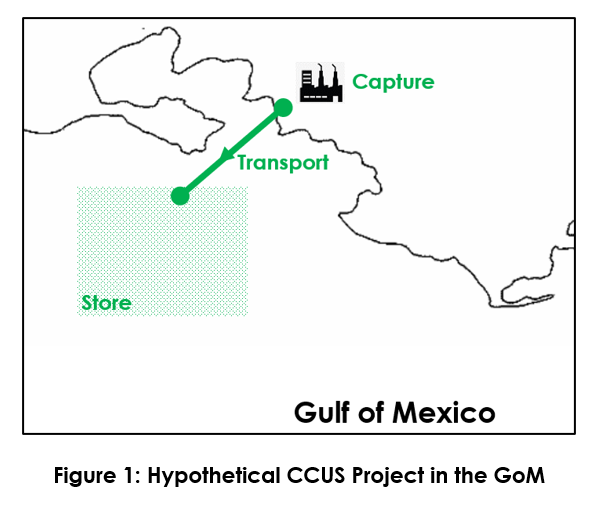
This article discusses high-level technical considerations when refitting an existing offshore infrastructure for CCUS applications.
Energy is changing. Because of the increasing threat of the consequences of a warming planet, new sources of energy are being developed that are expected to slow this planet-wide change. Some of these are well-known, such as nuclear, wind and solar, while others require more work, such as hydrogen, 3rd generation concentrated solar and fusion.
The overall aim of carbon capture and sequestration (CCS) is to store carbon dioxide (CO2) in geological formations in order to reduce the amount in the environment and lower the risk of catastrophic climate change. The rate of CO2 emission and the amount of it in the atmosphere has been increasing steadily since the beginning of the Industrial Revolution in the early part of the 19th century.
There are several developments in the area of electrolysis which seek to reduce the cost, increase the yield, or even change the source of transportable hydrogen.
This calculator calculates the triaxial stress (VME) at a given depth.
This calculates AP collapse resistance for a specific pipe.
This calculator calculates the change in length of pipe hanging in the hole due to tension, ballooning, buoyancy and thermal effects.
This calculates AP collapse resistance for a specific pipe.
The recent global over supply of crude oil and soft demand has resulted in oil companies shutting wells in to prevent destroying value and to protect their balance sheets. The time frame, until production startup becomes economic, is uncertain and therefore, it is imperative that appropriate actions are taken to maintain and manage the integrity of shut-in wells and associated delivery systems.
The time frame, until production startup becomes economic, is uncertain and therefore it is imperative that appropriate actions are taken to maintain and manage the integrity of the available Installed Production Capacity during shut-in.
This information provides insight to aid in preventing common failures and improving industry practices to reduce incident rates in addition to saving time and money.
This book is an exploration of what decision theory has to say about these and other common engineering problems.
The GATE Stream-based HAZOP process avoids these pitfalls via some novel modifications to the process. You can obtain a copy of the book here.
This GATEKEEPER article focuses on the prediction, prevention and remediation of liquid loading, including discussion of liquid loading analysis.
Casing and tubing that are subjected to combined loads have higher collapse strength than previous formulas would predict, permitting the use of thinner walled, or lower strength, pipe than formerly required.
Triaxial evaluation of loads is used extensively for casing and tubing string design and analysis. The paper presents a method of determining the triaxially based collapse strength of casing and tubing subjected to simultaneous axial and internal pressure loads.
In Part 1 of this GATEKEEPER series on complexity, we identified 8 key sources of project and project team complexity. In Part 2, we discuss what can be done about them.
A project consists of two interacting networks; one CPS (the kit) and one CAS (the human organization). We should expect some surprises (emergence) from the interaction of these two complex systems.
Efficient access to multiple permeable natural gas zones located in deep, over pressured, and extremely corrosive environments presents a challenge for South Texas operating companies.
Vacuum insulated tubing (VIT) has been used successfully to mitigate the potentially harmful effects of annular pressure buildup (APB). In a recent deepwater installation, the subject well had lost alternate APB mitigation capability through a series of events. VIT was then chosen as the only viable technology.
A method is presented such that two parameters can be used to fully describe the thermal characteristics of a tubing string undergoing an injection or production process.